Difference between revisions of "Language/Multiple-languages/Culture/Introduction-to-Han-script"
(Created page with "Hi, polyglots! Every time you see Han characters, you may see them as random strokes and wonder how other people memorise them. Once you have payed attention for a while and learned about the basics of Han script, they will become crystal clear to you. in progress == Evolution of Han script == There is an evolution: Egyptian → Proto-Sinaitic → Phoenician → … → most scripts used today. Han script has its own: oracle bone script [甲骨文], bronze script [金...") |
|||
| (209 intermediate revisions by the same user not shown) | |||
| Line 1: | Line 1: | ||
{{Han-script}} | |||
Hi, polyglots! | Hi, polyglots! | ||
| Line 9: | Line 11: | ||
There are artistic scripts derived from the regular script: | There are artistic scripts derived from the regular script: | ||
* running script [行書] | * running script [行書] (a.k.a. semi-cursive script) | ||
* grass script [草書] | * grass script [草書] (a.k.a. cursive script) | ||
There are also typefaces for printing: | There are also typefaces for printing: | ||
* Song [宋體] / Ming [明體] | * Song [宋體] / Ming [明體] (a.k.a. sans-serif) | ||
* Imitation Song [仿宋體] | * Imitation Song [仿宋體] | ||
* Gothic [黑體] | * Gothic [黑體] (a.k.a. sans) | ||
Glyph forms of early scripts are highly diverse. After the unification of China by Qin dynasty, glyph forms other than the ones used in the State of Qin are abolished. In the modern time, character glyph forms are standarised differently in different sovereign states and dependent territories. | Glyph forms of early scripts are highly diverse. After the unification of China by Qin dynasty, glyph forms other than the ones used in the State of Qin are abolished. In the modern time, character glyph forms are standarised differently in different sovereign states and dependent territories. | ||
Simplifications of Han characters take place in different times. Systematic simplifications include the creation of the clerical script in the State of Qin and the Chinese Character Simplification Scheme in the People's Republic of China. | Simplifications of Han characters take place in different times. Systematic simplifications include the creation of the clerical script in the State of Qin and the Chinese Character Simplification Scheme in the People's Republic of China. In Japan, there is also a reform that simplified the characters. Some character forms have gone through multiple changes, for example, 云 originally means “cloud”, then it was used for “say” and 雲 is used in substitute; then in the PRC's simplification, its meaning of “cloud” is restored. If one puts more value on its cultural heritage, then the Traditional variants are more preferred; if one puts more value on its nature of tools, then the Simplified variants are preferred. | ||
There are glyph forms considered more orthodoxy for preserving the original characteristics of the characters. Characters of these forms are called Inherited Characters [傳承字]. Open-source fonts include the following: | |||
* [https://github.com/ichitenfont/I.Ming I.明體] | |||
* [https://github.com/lxgw/LxgwWenkaiTC 霞鶩文楷 TC] | |||
* [https://github.com/GuiWonder/Shanggu 尚古] | |||
* [https://github.com/GuiWonder/HuayingMincho 華英明朝] | |||
* [https://github.com/NightFurySL2001/TangYuan-font 传承糖圆体] | |||
* [https://github.com/MoonlitOwen/ChocolateSans 朱古力黑體] | |||
There are website for searching characters: | |||
* [https://www.wiktionary.org/ Wiktionary] | |||
* [https://zi.tools/ 字統网] | |||
* [https://hanziyuan.net/ 字源] | |||
* [https://glyphwiki.org/ グリフウィキ] | |||
{| class="wikitable" | {| class="wikitable" | ||
| Line 25: | Line 41: | ||
!image | !image | ||
|- | |- | ||
|oracle bone script | |oracle bone script [甲骨文] | ||
|https://upload.wikimedia.org/wikipedia/commons/thumb/2/28/Shang_Inscribed_Ox_Scapula_%28for_divination%29.jpg/500px-Shang_Inscribed_Ox_Scapula_%28for_divination%29.jpg | |https://upload.wikimedia.org/wikipedia/commons/thumb/2/28/Shang_Inscribed_Ox_Scapula_%28for_divination%29.jpg/500px-Shang_Inscribed_Ox_Scapula_%28for_divination%29.jpg | ||
https://commons.wikimedia.org/wiki/Category:Oracle_bone_script | https://commons.wikimedia.org/wiki/Category:Oracle_bone_script | ||
|- | |- | ||
|bronze script | |bronze script [金文] | ||
|https://upload.wikimedia.org/wikipedia/commons/thumb/ | |https://upload.wikimedia.org/wikipedia/commons/thumb/d/d2/Warring_States_Bronze_Fou_%289831627495%29.jpg/330px-Warring_States_Bronze_Fou_%289831627495%29.jpg | ||
https://commons.wikimedia.org/wiki/Category:Bronze_script | https://commons.wikimedia.org/wiki/Category:Bronze_script | ||
|- | |- | ||
|seal script | |seal script [篆書] | ||
|https://upload.wikimedia.org/wikipedia/commons/thumb/4/41/Eastern_Han_Stone_Seal_Script_Tablet_%2810340491905%29.jpg/330px-Eastern_Han_Stone_Seal_Script_Tablet_%2810340491905%29.jpg | |https://upload.wikimedia.org/wikipedia/commons/thumb/4/41/Eastern_Han_Stone_Seal_Script_Tablet_%2810340491905%29.jpg/330px-Eastern_Han_Stone_Seal_Script_Tablet_%2810340491905%29.jpg | ||
https://commons.wikimedia.org/wiki/Category:Seal_script | https://commons.wikimedia.org/wiki/Category:Seal_script | ||
|- | |- | ||
|clerical script | |clerical script [隸書] | ||
|https://upload.wikimedia.org/wikipedia/commons/thumb/9/9c/%E7%86%B9%E5%B9%B3%E7%9F%B3%E7%B6%93.png/500px-%E7%86%B9%E5%B9%B3%E7%9F%B3%E7%B6%93.png | |https://upload.wikimedia.org/wikipedia/commons/thumb/9/9c/%E7%86%B9%E5%B9%B3%E7%9F%B3%E7%B6%93.png/500px-%E7%86%B9%E5%B9%B3%E7%9F%B3%E7%B6%93.png | ||
https://commons.wikimedia.org/wiki/Category:Clerical_script | https://commons.wikimedia.org/wiki/Category:Clerical_script | ||
|- | |- | ||
|regular script | |regular script [楷書] | ||
|https://upload.wikimedia.org/wikipedia/commons/thumb/8/87/%E5%94%90_%E5%82%B3%E9%8D%BE%E7%B4%B9%E4%BA%AC_%E6%A5%B7%E6%9B%B8%E9%9D%88%E9%A3%9B%E7%B6%93_%E5%86%8A-Spiritual_Flight_Sutra_MET_DP154061.jpg/250px-%E5%94%90_%E5%82%B3%E9%8D%BE%E7%B4%B9%E4%BA%AC_%E6%A5%B7%E6%9B%B8%E9%9D%88%E9%A3%9B%E7%B6%93_%E5%86%8A-Spiritual_Flight_Sutra_MET_DP154061.jpg | |https://upload.wikimedia.org/wikipedia/commons/thumb/8/87/%E5%94%90_%E5%82%B3%E9%8D%BE%E7%B4%B9%E4%BA%AC_%E6%A5%B7%E6%9B%B8%E9%9D%88%E9%A3%9B%E7%B6%93_%E5%86%8A-Spiritual_Flight_Sutra_MET_DP154061.jpg/250px-%E5%94%90_%E5%82%B3%E9%8D%BE%E7%B4%B9%E4%BA%AC_%E6%A5%B7%E6%9B%B8%E9%9D%88%E9%A3%9B%E7%B6%93_%E5%86%8A-Spiritual_Flight_Sutra_MET_DP154061.jpg | ||
https://commons.wikimedia.org/wiki/Category:Regular_script | https://commons.wikimedia.org/wiki/Category:Regular_script | ||
|- | |- | ||
|running script | |running script [行書] | ||
|https://upload.wikimedia.org/wikipedia/commons/thumb/3/34/Er_xie-wang_xizhi.jpg/ | |https://upload.wikimedia.org/wikipedia/commons/thumb/3/34/Er_xie-wang_xizhi.jpg/330px-Er_xie-wang_xizhi.jpg | ||
https://commons.wikimedia.org/wiki/Category:Semi-cursive_script | https://commons.wikimedia.org/wiki/Category:Semi-cursive_script | ||
|- | |- | ||
|grass script | |grass script [草書] | ||
|https://upload.wikimedia.org/wikipedia/commons/thumb/5/50/%E6%80%80%E7%B4%A0_%E8%8B%A6%E7%AC%8B%E5%B8%96.jpg/ | |https://upload.wikimedia.org/wikipedia/commons/thumb/5/50/%E6%80%80%E7%B4%A0_%E8%8B%A6%E7%AC%8B%E5%B8%96.jpg/330px-%E6%80%80%E7%B4%A0_%E8%8B%A6%E7%AC%8B%E5%B8%96.jpg | ||
https://commons.wikimedia.org/wiki/Category:Chinese_cursive_script | https://commons.wikimedia.org/wiki/Category:Chinese_cursive_script | ||
|} | |} | ||
| Line 58: | Line 74: | ||
!image | !image | ||
|- | |- | ||
|Song / Ming | |Song [宋體] / Ming [明體] | ||
|https://upload.wikimedia.org/wikipedia/commons/thumb/2/20/%E9%BD%8A%E6%9B%B811.jpg/ | |https://upload.wikimedia.org/wikipedia/commons/thumb/2/20/%E9%BD%8A%E6%9B%B811.jpg/330px-%E9%BD%8A%E6%9B%B811.jpg | ||
https://commons.wikimedia.org/wiki/Category:Ming_(typefaces) | https://commons.wikimedia.org/wiki/Category:Ming_(typefaces) | ||
|- | |- | ||
|Imitation Song | |Imitation Song [仿宋體] | ||
|https://upload.wikimedia.org/wikipedia/commons/8/8a/%E8%8F%8A%E6%BE%97%E5%B0%8F%E9%9B%86%E7%B5%82%E9%A0%81.jpg | |https://upload.wikimedia.org/wikipedia/commons/8/8a/%E8%8F%8A%E6%BE%97%E5%B0%8F%E9%9B%86%E7%B5%82%E9%A0%81.jpg | ||
|- | |- | ||
|Gothic | |Gothic [黑體] | ||
|https://upload.wikimedia.org/wikipedia/commons/thumb/0/08/SourceHanSans.svg/ | |https://upload.wikimedia.org/wikipedia/commons/thumb/0/08/SourceHanSans.svg/500px-SourceHanSans.svg.png | ||
|} | |} | ||
== Creation of Han characters == | == Creation and use of Han characters == | ||
It is mentioned that there are six categories of characters [六書] in the ''Rites of Zhōu'' [ | It is mentioned that there are six categories of characters [六書] in the ''Rites of Zhōu'' [《周禮》] without explanation; later explanations are disputed. There are undisputed four categories of method to form characters and two disputed categories of method to use characters. The four undisputed categories: | ||
{| class="wikitable" | {| class="wikitable" | ||
| Line 81: | Line 97: | ||
|- | |- | ||
|pictographs [象形字] | |pictographs [象形字] | ||
|a character where | |a character where concrete objects are depicted in pictorial form | ||
| | | | ||
* 日 | * 日 | ||
| Line 98: | Line 114: | ||
* shape of a water stream | * shape of a water stream | ||
|- | |- | ||
| | |simple ideographs [指事字] | ||
|a character where abstract ideas are depicted in pictorial form | |a character where abstract ideas are depicted in pictorial form | ||
| | | | ||
| Line 117: | Line 133: | ||
|- | |- | ||
|compound ideographs [會意字] | |compound ideographs [會意字] | ||
|a character consisting of two semantic components | |a character consisting of two or more semantic components | ||
| | | | ||
* 武 | * 武 | ||
| Line 125: | Line 141: | ||
| | | | ||
* martial | * martial | ||
* trust | * message, trust | ||
* pick | * pick | ||
* compare | * compare | ||
| Line 152: | Line 168: | ||
* the reading of the word “heavy” and a force | * the reading of the word “heavy” and a force | ||
|} | |} | ||
They can be found at [https://en.wiktionary.org/wiki/Category:Han_characters_by_formation_type Wiktionary Category:Han characters by formation type]. | |||
In practice, there is also a rare category: phonetic compounds [會音字]. | |||
There may be multiple variants for a character. A form is chosen as the standard one in an orthography. An example is 龜 `tortoise`: | |||
https://upload.wikimedia.org/wikipedia/commons/thumb/3/33/Variants_of_Kangxi_radical_213_%27turtle%27.svg/960px-Variants_of_Kangxi_radical_213_%27turtle%27.svg.png | |||
A character may be used differently than its original use. In some cases, the meaning of a character is diverted and a new character is created to bear that original meaning; in some other cases, a character is used to represent a homophone intentionally. There are disputes over those cases on how to classify them. | |||
== Strokes of a character == | |||
The elementary components of characters are strokes [筆畫]. Basic strokes [基本筆畫] are | |||
{| class="wikitable" | |||
!stroke | |||
!modern name of stroke | |||
!writing direction | |||
|- | |||
|㇐ | |||
|horizontal [橫] | |||
|https://upload.wikimedia.org/wikipedia/commons/thumb/f/f2/Basic_h.png/60px-Basic_h.png | |||
|- | |||
|㇑ | |||
|vertical [豎] | |||
|https://upload.wikimedia.org/wikipedia/commons/thumb/4/43/Basic_v.png/60px-Basic_v.png | |||
|- | |||
|㇒ | |||
|throw [撇] | |||
|https://upload.wikimedia.org/wikipedia/commons/thumb/c/c5/Basic_t.png/60px-Basic_t.png | |||
|- | |||
|㇏ | |||
|press [捺] | |||
|https://upload.wikimedia.org/wikipedia/commons/thumb/5/5f/Basic_p.png/60px-Basic_p.png | |||
|- | |||
|㇔ | |||
|dot [點] | |||
|https://upload.wikimedia.org/wikipedia/commons/thumb/e/ea/Basic_d.png/60px-Basic_d.png | |||
|- | |||
|㇀ | |||
|raise [提] | |||
|https://upload.wikimedia.org/wikipedia/commons/thumb/2/25/Basic_u.png/60px-Basic_u.png | |||
|- | |||
|㇚ | |||
|hook [鉤] | |||
|https://upload.wikimedia.org/wikipedia/commons/thumb/b/b4/Basic_j.png/60px-Basic_j.png | |||
|- | |||
|㇁ | |||
|curve [彎] | |||
|https://upload.wikimedia.org/wikipedia/commons/thumb/8/80/Basic_c.png/60px-Basic_c.png | |||
|} | |||
{| class="wikitable" | |||
|+additional | |||
!stroke | |||
!modern name of stroke | |||
!writing direction | |||
|- | |||
|㇄ | |||
|slant [曲] | |||
|https://upload.wikimedia.org/wikipedia/commons/thumb/e/e7/Basic_a.png/60px-Basic_a.png | |||
|- | |||
|㇣ | |||
|circle [圈] | |||
|https://upload.wikimedia.org/wikipedia/commons/thumb/2/2d/Basic_o.png/60px-Basic_o.png | |||
|} | |||
A compound stroke [複合筆畫] is a stroke that is combined by multiple basic strokes. They can be defined differently by different approaches. For example: | |||
https://upload.wikimedia.org/wikipedia/commons/thumb/1/1f/CJK_37_Strokes_%288%2B29%29.png/960px-CJK_37_Strokes_%288%2B29%29.png | |||
The character 永 `eternal` has all eight traditional basic strokes, so it is often used to practice calligraphy. | |||
https://upload.wikimedia.org/wikipedia/commons/thumb/c/c6/8_strokes_of_%E6%B0%B8-zh.svg/500px-8_strokes_of_%E6%B0%B8-zh.svg.png | |||
== Components of a character == | |||
A character is made of one or more components. Those components are made of one or more strokes. | |||
Those components are written one by one from left to right, from top to bottom, in order to make the character look good. | |||
The components used for indexing in a dictionary are called radicals [部首]. In some cases, a character may be assigned multiple radicals. ''Explaining Graphs and Analyzing Characters'' [《說文解字》] in small seal script and ''Kāngxī Dictionary'' [《康熙字典》] in regular script published in c. 100 and 1716 are two of the most authoritative dictionaries, where [https://en.wikipedia.org/wiki/List_of_Shuowen_Jiezi_radicals 540] and [https://en.wikipedia.org/wiki/Kangxi_radicals 214] radicals are listed. | |||
The compositions of a characters are the followings: | |||
{| class="wikitable" | {| class="wikitable" | ||
| | !composition | ||
!common radicals | |||
|- | |||
|⿰ | |||
|(many) | |||
|- | |||
|⿱ | |||
|(many) | |||
|- | |||
|⿲ | |||
|(many) | |||
|- | |||
|⿳ | |||
|(many) | |||
|- | |||
|⿴ | |||
|囗 | |||
|- | |||
|⿵ | |||
|冂、几、門、鬥 | |||
|- | |||
|⿶ | |||
|凵 | |||
|- | |||
|⿷ | |||
|匚、匸 | |||
|- | |- | ||
| | |⿼ | ||
| | | | ||
|- | |||
|⿸ | |||
|厂、尸、手、广、戶、疒、羊、老 | |||
|- | |||
|⿹ | |||
|乙、勹、弋、气 | |||
|- | |||
|⿺ | |||
|大、尢、廴、⽑、⽖、⾛、瓜、辵、鬼、麥、鼠 | |||
|- | |||
|⿽ | |||
|水 | |||
|- | |||
|⿻ | |||
|木 | |||
|- | |||
|⿾ | |||
| | | | ||
|- | |||
|⿿ | |||
| | | | ||
|- | |- | ||
| | |〾 | ||
| | | | ||
|- | |||
|㇯ | |||
| | | | ||
|} | |} | ||
There are also ways to pick up a type in printing quickly. After the popularisation of computers, shape-based input methods emerged. Those components of such input methods are called roots [字根]. | |||
{| class="wikitable" | |||
!shape-based input method | |||
!time | |||
!layout | |||
|- | |||
|四角 | |||
|1925 | |||
|https://upload.wikimedia.org/wikipedia/commons/thumb/a/aa/Sijiaohaoma_jianzifa.svg/330px-Sijiaohaoma_jianzifa.svg.png | |||
|- | |||
|三角 | |||
|1971 | |||
|https://upload.wikimedia.org/wikipedia/commons/thumb/d/d5/3corner_an_illustration.svg/330px-3corner_an_illustration.svg.png | |||
|- | |||
|倉頡 | |||
|1976 | |||
|https://upload.wikimedia.org/wikipedia/commons/thumb/5/51/%E5%80%89%E9%A0%A1%E8%BC%B8%E5%85%A5%E6%B3%95%E4%BA%94%E5%AD%97%E6%8B%86%E7%A2%BC.svg/330px-%E5%80%89%E9%A0%A1%E8%BC%B8%E5%85%A5%E6%B3%95%E4%BA%94%E5%AD%97%E6%8B%86%E7%A2%BC.svg.png | |||
|- | |||
|大易 | |||
|1988 | |||
|https://upload.wikimedia.org/wikipedia/commons/thumb/7/7a/Dayi-method.svg/330px-Dayi-method.svg.png | |||
|- | |||
|嘸蝦米 | |||
|1990 | |||
|https://upload.wikimedia.org/wikipedia/commons/thumb/6/62/Boshiamy_decomposed2.svg/330px-Boshiamy_decomposed2.svg.png | |||
|- | |||
|行列 | |||
|1992 | |||
|https://upload.wikimedia.org/wikipedia/commons/thumb/3/35/Array30Demo.svg/330px-Array30Demo.svg.png | |||
|- | |||
|縱橫 | |||
|1993 | |||
|https://upload.wikimedia.org/wikipedia/commons/thumb/2/2f/CkcExample.svg/330px-CkcExample.svg.png | |||
|} | |||
== Readings of a character == | |||
In pre-modern times, readings of characters by the officials are called the elegant pronunciations [雅音]. They were ''de facto'' standard pronunciations. | |||
For Chinese language, each character has phonetically and semantically identical readings; for non-Chinese languages, each character has two types of reading: one being phonetically similar to the Chinese reading, which is called the sound reading [音讀], the other being the semantically corresponding native word's reading, which is called the instructed reading [訓讀]. | |||
The ancient method to note readings is called reverse cutting [反切], where each character's reading is denoted by a character's initial consonant and the rest of another character's syllable. For example, the reading of 東 is denoted by the initial consonant of 德 and the rest of 紅: | |||
https://upload.wikimedia.org/wikipedia/commons/thumb/a/a8/Qieyun_Dong_entry_fanqie.svg/120px-Qieyun_Dong_entry_fanqie.svg.png | |||
It is similar to a dictionary's approach: each word is defined by other words. | |||
Before the widespread of Romanisations, other writing systems emerged to record readings: Kana, Nüshu, Hangul. For Mandarin Chinese, Bopomofo was developed in 1910s. | |||
To address a single character while differentiating it from its homophones, one may say its components first and then say the character. For example, “bow–long stretch” (弓長張) for 張. | |||
== Calligraphy == | |||
There are tens of thousands of characters in Han script, and even more glyphs, in Han script. The calligraphy of it is also developed. | |||
There is a website for searching characters in calligraphy [https://sfzd.jiguzuo.com/ 集古作书法字典]. | |||
== Set phrases == | |||
Set phrases [成語] are a kind of idiomatic expressions in Han script. They are mostly as short as four characters. There are | |||
* Chinese set phrases on [https://letstraveltochina.com/chinese-idioms/ Let's Travel To China] | |||
* Japanese set phrases on [https://imabi.org/idioms-iv-yojijukugo/ IMABI] | |||
* Korean set phrases on [http://www.koreanlii.or.kr/w/index.php/4-character_idiom KoreanLII]. | |||
For languages other than Chinese, it is also possible to build set phrases in the same manner. | |||
Example of popularised English idioms in Chinese set phrases: | |||
* tip of the iceberg 冰山一角 : iceberg + a + corner | |||
* kill two birds with one stone 一石二鳥 : one + stone + two + birds | |||
{{Han-script}} | |||
Latest revision as of 21:25, 24 April 2026
| introduction | variants | parts | Restructure |
| Hanisation | texts | idioms | place names |
Hi, polyglots!
Every time you see Han characters, you may see them as random strokes and wonder how other people memorise them. Once you have payed attention for a while and learned about the basics of Han script, they will become crystal clear to you.
in progress
Evolution of Han script[edit | edit source]
There is an evolution: Egyptian → Proto-Sinaitic → Phoenician → … → most scripts used today. Han script has its own: oracle bone script [甲骨文], bronze script [金文] and other scripts → seal script [篆書] → clerical script [隸書] → regular script [楷書].
There are artistic scripts derived from the regular script:
- running script [行書] (a.k.a. semi-cursive script)
- grass script [草書] (a.k.a. cursive script)
There are also typefaces for printing:
- Song [宋體] / Ming [明體] (a.k.a. sans-serif)
- Imitation Song [仿宋體]
- Gothic [黑體] (a.k.a. sans)
Glyph forms of early scripts are highly diverse. After the unification of China by Qin dynasty, glyph forms other than the ones used in the State of Qin are abolished. In the modern time, character glyph forms are standarised differently in different sovereign states and dependent territories.
Simplifications of Han characters take place in different times. Systematic simplifications include the creation of the clerical script in the State of Qin and the Chinese Character Simplification Scheme in the People's Republic of China. In Japan, there is also a reform that simplified the characters. Some character forms have gone through multiple changes, for example, 云 originally means “cloud”, then it was used for “say” and 雲 is used in substitute; then in the PRC's simplification, its meaning of “cloud” is restored. If one puts more value on its cultural heritage, then the Traditional variants are more preferred; if one puts more value on its nature of tools, then the Simplified variants are preferred.
There are glyph forms considered more orthodoxy for preserving the original characteristics of the characters. Characters of these forms are called Inherited Characters [傳承字]. Open-source fonts include the following:
There are website for searching characters:
| script | image |
|---|---|
| oracle bone script [甲骨文] | 
https://commons.wikimedia.org/wiki/Category:Oracle_bone_script |
| bronze script [金文] | 
|
| seal script [篆書] | 
|
| clerical script [隸書] | 
|
| regular script [楷書] | 
|
| running script [行書] | 
https://commons.wikimedia.org/wiki/Category:Semi-cursive_script |
| grass script [草書] | 
https://commons.wikimedia.org/wiki/Category:Chinese_cursive_script |
| typeface | image |
|---|---|
| Song [宋體] / Ming [明體] | 
https://commons.wikimedia.org/wiki/Category:Ming_(typefaces) |
| Imitation Song [仿宋體] | 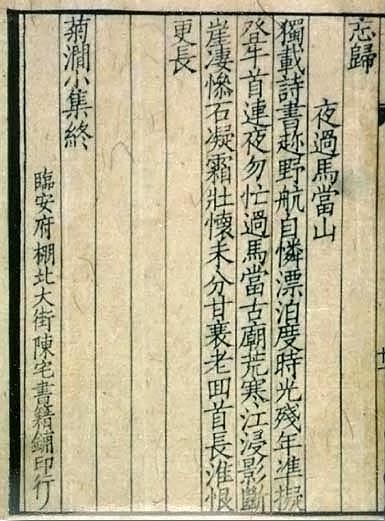
|
| Gothic [黑體] | 
|
Creation and use of Han characters[edit | edit source]
It is mentioned that there are six categories of characters [六書] in the Rites of Zhōu [《周禮》] without explanation; later explanations are disputed. There are undisputed four categories of method to form characters and two disputed categories of method to use characters. The four undisputed categories:
| category of characters | explanation of the category | example | meaning of the example | explanation of the example |
|---|---|---|---|---|
| pictographs [象形字] | a character where concrete objects are depicted in pictorial form |
|
|
|
| simple ideographs [指事字] | a character where abstract ideas are depicted in pictorial form |
|
|
|
| compound ideographs [會意字] | a character consisting of two or more semantic components |
|
|
|
| phono-semantic compounds [形聲字] | a character consisting of a phonetic and a semantic components |
|
|
|
They can be found at Wiktionary Category:Han characters by formation type.
In practice, there is also a rare category: phonetic compounds [會音字].
There may be multiple variants for a character. A form is chosen as the standard one in an orthography. An example is 龜 `tortoise`:

A character may be used differently than its original use. In some cases, the meaning of a character is diverted and a new character is created to bear that original meaning; in some other cases, a character is used to represent a homophone intentionally. There are disputes over those cases on how to classify them.
Strokes of a character[edit | edit source]
The elementary components of characters are strokes [筆畫]. Basic strokes [基本筆畫] are
| stroke | modern name of stroke | writing direction |
|---|---|---|
| ㇐ | horizontal [橫] | 
|
| ㇑ | vertical [豎] | 
|
| ㇒ | throw [撇] | 
|
| ㇏ | press [捺] | 
|
| ㇔ | dot [點] | 
|
| ㇀ | raise [提] | 
|
| ㇚ | hook [鉤] | 
|
| ㇁ | curve [彎] | 
|
| stroke | modern name of stroke | writing direction |
|---|---|---|
| ㇄ | slant [曲] | 
|
| ㇣ | circle [圈] | 
|
A compound stroke [複合筆畫] is a stroke that is combined by multiple basic strokes. They can be defined differently by different approaches. For example:

The character 永 `eternal` has all eight traditional basic strokes, so it is often used to practice calligraphy.

Components of a character[edit | edit source]
A character is made of one or more components. Those components are made of one or more strokes.
Those components are written one by one from left to right, from top to bottom, in order to make the character look good.
The components used for indexing in a dictionary are called radicals [部首]. In some cases, a character may be assigned multiple radicals. Explaining Graphs and Analyzing Characters [《說文解字》] in small seal script and Kāngxī Dictionary [《康熙字典》] in regular script published in c. 100 and 1716 are two of the most authoritative dictionaries, where 540 and 214 radicals are listed.
The compositions of a characters are the followings:
| composition | common radicals |
|---|---|
| ⿰ | (many) |
| ⿱ | (many) |
| ⿲ | (many) |
| ⿳ | (many) |
| ⿴ | 囗 |
| ⿵ | 冂、几、門、鬥 |
| ⿶ | 凵 |
| ⿷ | 匚、匸 |
| ⿼ | |
| ⿸ | 厂、尸、手、广、戶、疒、羊、老 |
| ⿹ | 乙、勹、弋、气 |
| ⿺ | 大、尢、廴、⽑、⽖、⾛、瓜、辵、鬼、麥、鼠 |
| ⿽ | 水 |
| ⿻ | 木 |
| ⿾ | |
| ⿿ | |
| 〾 | |
| ㇯ |
There are also ways to pick up a type in printing quickly. After the popularisation of computers, shape-based input methods emerged. Those components of such input methods are called roots [字根].
| shape-based input method | time | layout |
|---|---|---|
| 四角 | 1925 | 
|
| 三角 | 1971 | 
|
| 倉頡 | 1976 | 
|
| 大易 | 1988 | 
|
| 嘸蝦米 | 1990 | 
|
| 行列 | 1992 | 
|
| 縱橫 | 1993 | 
|
Readings of a character[edit | edit source]
In pre-modern times, readings of characters by the officials are called the elegant pronunciations [雅音]. They were de facto standard pronunciations.
For Chinese language, each character has phonetically and semantically identical readings; for non-Chinese languages, each character has two types of reading: one being phonetically similar to the Chinese reading, which is called the sound reading [音讀], the other being the semantically corresponding native word's reading, which is called the instructed reading [訓讀].
The ancient method to note readings is called reverse cutting [反切], where each character's reading is denoted by a character's initial consonant and the rest of another character's syllable. For example, the reading of 東 is denoted by the initial consonant of 德 and the rest of 紅:

It is similar to a dictionary's approach: each word is defined by other words.
Before the widespread of Romanisations, other writing systems emerged to record readings: Kana, Nüshu, Hangul. For Mandarin Chinese, Bopomofo was developed in 1910s.
To address a single character while differentiating it from its homophones, one may say its components first and then say the character. For example, “bow–long stretch” (弓長張) for 張.
Calligraphy[edit | edit source]
There are tens of thousands of characters in Han script, and even more glyphs, in Han script. The calligraphy of it is also developed.
There is a website for searching characters in calligraphy 集古作书法字典.
Set phrases[edit | edit source]
Set phrases [成語] are a kind of idiomatic expressions in Han script. They are mostly as short as four characters. There are
- Chinese set phrases on Let's Travel To China
- Japanese set phrases on IMABI
- Korean set phrases on KoreanLII.
For languages other than Chinese, it is also possible to build set phrases in the same manner.
Example of popularised English idioms in Chinese set phrases:
- tip of the iceberg 冰山一角 : iceberg + a + corner
- kill two birds with one stone 一石二鳥 : one + stone + two + birds
| introduction | variants | parts | Restructure |
| Hanisation | texts | idioms | place names |