Language/Multiple-languages/Culture/Traditional-Musical-Instruments:-Eastern-Asia
< Language | Multiple-languages | Culture
Jump to navigation
Jump to search
Revision as of 03:06, 17 May 2023 by GrimPixel (talk | contribs) (Created page with "{{Traditional-Musical-Instruments}} This page features translations of traditional musical instrument terms in different languages from Eastern Asia, accompanied by pictures and videos. == String == === ''Bipa'' === {| class="wikitable" !Japanese |- |비파 琵琶 |} Korean: https://upload.wikimedia.org/wikipedia/commons/thumb/1/11/Bipa_%28Korean_musical_instrument%29.jpg/319px-Bipa_%28Korean_musical_instrument%29.jpg <div class="mw-collapsible mw-collapsed"> <yout...")
Rate this lesson: 


* contains entries that can also belong to other articles

This page features translations of traditional musical instrument terms in different languages from Eastern Asia, accompanied by pictures and videos.
String
Bipa
| Japanese |
|---|
| 비파
琵琶 |
Korean:

Biwa
| Japanese |
|---|
| 琵琶
びわ |
Yamato:

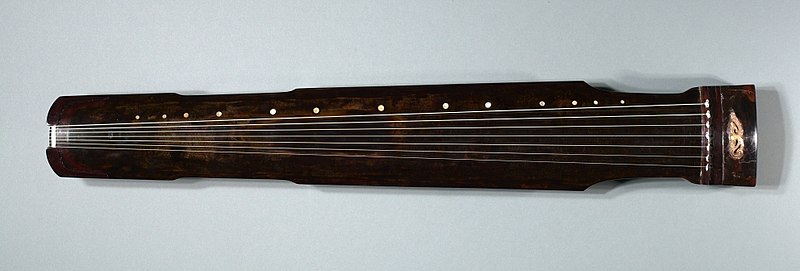
Gǔqín
| Chinese |
|---|
| 古琴
ㄍㄨˇ ㄑㄧㄣˊ; gu2 kam4 |
Han:
Haegeum
| Korean |
|---|
| 해금
奚琴 |
Korean:

Pípá
| Chinese |
|---|
| 琵琶
ㄆㄧˊ ㄆㄚˊ; pei4 paa4 |
Han:

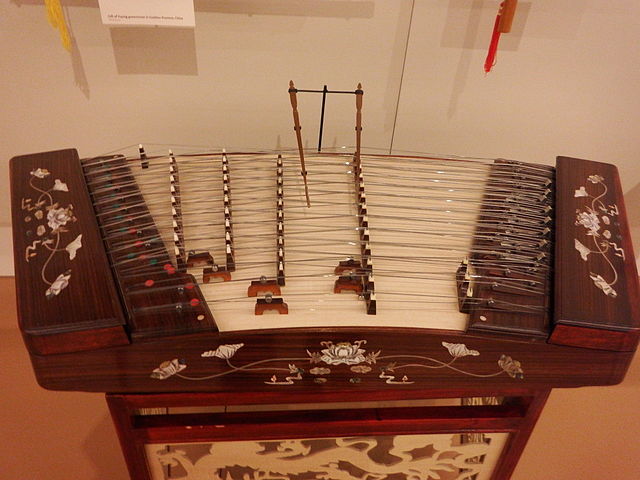
Yángqín
| Chinese |
|---|
| 揚琴/扬琴
ㄧㄤˊ ㄑㄧㄣˊ; joeng4 kam4 |
Han: