Language/Multiple-languages/Culture/Traditional-Symbols-and-Motifs
< Language | Multiple-languages | Culture
Jump to navigation
Jump to search
Rate this lesson: 


- contains entries that can also belong to other articles

Hi, everyone. Here is the index of a gallery of traditional architectures before 1970 around the world.
Details:
- 19 Popular Types of Chinese Knots and Their Meanings https://anyofchina.com/popular-types-of-chinese-knots-and-their-meanings/
- Adinkra Symbols & Meanings https://www.adinkrasymbols.org/
- Heraldry of the world https://www.heraldry-wiki.com/wiki/Heraldry_of_the_world
- Kilim Motifs and Symbols https://www.kilim.com/kilim-wiki/kilim-motifs
- Our 8 Favourite Celtic Knots and their Meanings https://irelandwide.com/celtic-knots/#5-dara-knot-5
- Тамга https://ru.wikipedia.org/wiki/%D0%A2%D0%B0%D0%BC%D0%B3%D0%B0
- 日本の内装材料辞典 伝統文様 https://naisouzairyou-annai.jp/pattern/tradition/index.html
- 家紋のいろは https://irohakamon.com/
- 纹明 https://cnpattern.cn/index
Article status: in progress
Categories[edit | edit source]
| symbol/motif | description | place of origin | time of origin | image |
|---|---|---|---|---|
|
represents fire, lightning bolts and the sun; represents prosperity and good luck, reverse version represents night or tantric aspects of Kali in Hinduism; represents Suparshvanatha in Jainism; represents auspicious footprints of the Buddha in Buddhism; symbol of national socialism | Mezine | 17000 BC – 10000 BC | 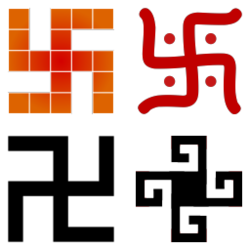
|
|
Mesopotamia | c. 6000 BC | 
https://commons.wikimedia.org/wiki/Category:Master_of_Animals | |
|
Malta | c. 4400 BC – 3600 BC | 
| |
|
symbol of Hermes; used to represent printing, commerce, medicine | Mesopotamia | c. 4000 BC – 3000 BC | 
|
|
represents life | 30th century BC – 29th century BC | Egypt | 
|
|
ornament | Egypt | c. 2500 BC | 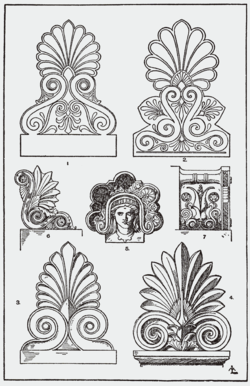
|
|
auspicious symbol in Buddhism, Hinduism, Jainism | Indus Valley | c. 2500 BC | 
|
|
Anatolia | 20th century BC | 
| |
|
ornament | c. 1600 BC – c. 1045 BC | China, Greece, Maya Region | 
|
|
Egypt | 14th century BC | 
| |
|
auspicious clouds: represents peace | 1131 BC – 1012 BC | China | 
|
|
originally used to record information; ornament | China | Warring States period
(481 BC – 221 BC) |

|
|
ornament | Greece | c. 420 BC – 450 BC | 
https://commons.wikimedia.org/wiki/Category:Acanthus_ornaments |
|
national symbol of Armenia | 1st century BC | 
https://commons.wikimedia.org/wiki/Category:Armenian_eternity_sign | |
|
ornament | Syria | 2nd century | 
|
|
Northern Europe | 7th century | 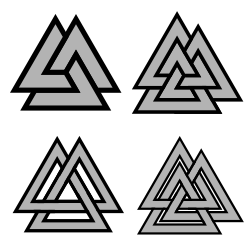
| |
|
character of fortune | China | Song period
(960 – 1279) |

https://commons.wikimedia.org/wiki/Category:Symbols_based_on_%E7%A6%8F |
|
symbol of Islam | al-Andalus | 2nd century | 
|
|
Java | Majapahit period
(1292 – 1527) |

| |
|
represents the nation of France | France | Renaissance
(14th century – 17th century) |
|
|
national symbol of Mongolia | Mongolia | 1686 | 
|
|
personification of the French Republic | France | 1789 | 
|
|
image of Inti; represents the May Revolution | Río de la Plata | 1810 | 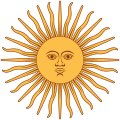
|
|
Eye of Horus: represents well-being, healing, and protection | Egypt | 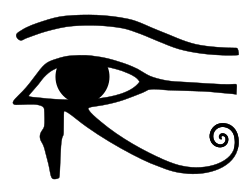
| |
|
Gyaman | 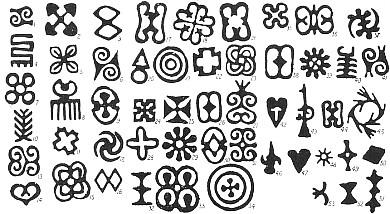
| ||
|
represents the Sun and eternity | Georgia | 
| |
|

| |||
|
Andes | 
| ||
|
circle that is enlightenment, emptiness, freedom, and the state of no-mind in Zen Buddhism | Japan | 
| |
|
wheel of joy: ritual symbol in Tibetan and Han Buddhism | Tibet | 
| |
|
ornament | Central Asia, Western Asia | 
| |
|
protection against the evil eye; hand of Mary in Christianity; hand of Fatima in Islam; Ahl al-Kisa in Shia; the “strong hand” of the Lord in Judaism | Northern Africa | 
| |
|
ornament | Greece | 
| |
|
represents new life, growth, strength and peace | New Zealand | 
| |
|
symbol of Inanna/Ishtar | Mesopotamia | 
| |
|
symbol of Shamash | Mesopotamia | 
| |
|
ornament | Mindoro | 
| |
|
national symbol of the Kurds | Kurdistan Region | 
| |
|
Islam oath and creed | Arabia | 
| |
|
double happiness: ornament for marriage | China | 
| |
|
symbol of native Andean peoples | Andes | 
| |
|
represents yin and yang | China | 
| |
|
associated with many ideas that are related to twists including water, waves, clouds, serpents, cyclical movements | Mesoamerica | 
|


- contains entries that can also belong to other articles
Other Lessons[edit source]
- Introduction to Common Han Characters
- Ranking of countries by cost of living in the world
- Introduction to Writing Systems
- Traditional Architectures
- Traditional Symbols and Motifs
- Naming in different cultures
- Text Processing Tools
- Productivity tools for polyglots
- Similar Sayings
- Websites of DIY Procedures
- Comparison of Advanced FLOSS Tools for Learning
- Best Singers
- Most Famous Folk Songs