Difference between revisions of "Language/Multiple-languages/Culture/Introduction-to-Writing-Systems"
| Line 12: | Line 12: | ||
!language | !language | ||
!region | !region | ||
!timespan | |||
!example | !example | ||
|- | |- | ||
| Line 17: | Line 18: | ||
|Luwian | |Luwian | ||
|Anatolia | |Anatolia | ||
|14<sup>th</sup> to 13<sup>th</sup> centuries BC – 7<sup>th</sup> century BC | |||
|https://upload.wikimedia.org/wikipedia/commons/thumb/7/75/Hamath_inscription.jpg/300px-Hamath_inscription.jpg | |https://upload.wikimedia.org/wikipedia/commons/thumb/7/75/Hamath_inscription.jpg/300px-Hamath_inscription.jpg | ||
|- | |- | ||
| Line 22: | Line 24: | ||
|Nahuatl | |Nahuatl | ||
|Mesoamerica | |Mesoamerica | ||
|before 16th century – c. 1530 AD | |||
|https://upload.wikimedia.org/wikipedia/commons/thumb/c/cc/Aztec_Triple_Alliance_Glyphs.jpg/300px-Aztec_Triple_Alliance_Glyphs.jpg | |https://upload.wikimedia.org/wikipedia/commons/thumb/c/cc/Aztec_Triple_Alliance_Glyphs.jpg/300px-Aztec_Triple_Alliance_Glyphs.jpg | ||
|- | |- | ||
| | |Cretan | ||
|Minoan | |Minoan | ||
|Crete | |Crete | ||
|c. 2100 – 1700 BC | |||
|https://upload.wikimedia.org/wikipedia/commons/thumb/3/32/%CE%94%CE%AF%CF%83%CE%BA%CE%BF%CF%82_%CF%84%CE%B7%CF%82_%CE%A6%CE%B1%CE%B9%CF%83%CF%84%CE%BF%CF%8D_%CF%80%CE%BB%CE%B5%CF%85%CF%81%CE%AC_B_6381.JPG/600px-%CE%94%CE%AF%CF%83%CE%BA%CE%BF%CF%82_%CF%84%CE%B7%CF%82_%CE%A6%CE%B1%CE%B9%CF%83%CF%84%CE%BF%CF%8D_%CF%80%CE%BB%CE%B5%CF%85%CF%81%CE%AC_B_6381.JPG | |https://upload.wikimedia.org/wikipedia/commons/thumb/3/32/%CE%94%CE%AF%CF%83%CE%BA%CE%BF%CF%82_%CF%84%CE%B7%CF%82_%CE%A6%CE%B1%CE%B9%CF%83%CF%84%CE%BF%CF%8D_%CF%80%CE%BB%CE%B5%CF%85%CF%81%CE%AC_B_6381.JPG/600px-%CE%94%CE%AF%CF%83%CE%BA%CE%BF%CF%82_%CF%84%CE%B7%CF%82_%CE%A6%CE%B1%CE%B9%CF%83%CF%84%CE%BF%CF%8D_%CF%80%CE%BB%CE%B5%CF%85%CF%81%CE%AC_B_6381.JPG | ||
(Phaistos Disc) | (Phaistos Disc) | ||
| Line 33: | Line 37: | ||
|Sumerian, Akkadian, etc. | |Sumerian, Akkadian, etc. | ||
|Mesopotamia | |Mesopotamia | ||
|c. 35<sup>th</sup> century BC – 2<sup>nd</sup> century AD | |||
|https://upload.wikimedia.org/wikipedia/commons/thumb/9/91/Sumerian_26th_c_Adab.jpg/400px-Sumerian_26th_c_Adab.jpg | |https://upload.wikimedia.org/wikipedia/commons/thumb/9/91/Sumerian_26th_c_Adab.jpg/400px-Sumerian_26th_c_Adab.jpg | ||
|- | |- | ||
| Line 38: | Line 43: | ||
|Eteocypriot | |Eteocypriot | ||
|Cyprus | |Cyprus | ||
|c. 1550 – 1050 BC | |||
|https://upload.wikimedia.org/wikipedia/commons/thumb/e/ed/Tablet_cypro-minoan_2_Louvre_AM2336.jpg/505px-Tablet_cypro-minoan_2_Louvre_AM2336.jpg | |https://upload.wikimedia.org/wikipedia/commons/thumb/e/ed/Tablet_cypro-minoan_2_Louvre_AM2336.jpg/505px-Tablet_cypro-minoan_2_Louvre_AM2336.jpg | ||
|- | |- | ||
| Line 43: | Line 49: | ||
|Egyptian | |Egyptian | ||
|Egypt | |Egypt | ||
| | |||
|https://upload.wikimedia.org/wikipedia/commons/thumb/3/34/Minnakht_01.JPG/400px-Minnakht_01.JPG | |https://upload.wikimedia.org/wikipedia/commons/thumb/3/34/Minnakht_01.JPG/400px-Minnakht_01.JPG | ||
|- | |- | ||
| Line 48: | Line 55: | ||
|Chinese, etc. | |Chinese, etc. | ||
|East Asia | |East Asia | ||
|2<sup>nd</sup> millennium BC – | |||
|https://wikiless.org/media/wikipedia/commons/thumb/2/28/Shang_Inscribed_Ox_Scapula_%28for_divination%29.jpg/512px-Shang_Inscribed_Ox_Scapula_%28for_divination%29.jpg | |https://wikiless.org/media/wikipedia/commons/thumb/2/28/Shang_Inscribed_Ox_Scapula_%28for_divination%29.jpg/512px-Shang_Inscribed_Ox_Scapula_%28for_divination%29.jpg | ||
|- | |- | ||
| Line 53: | Line 61: | ||
|Minoan | |Minoan | ||
|Crete | |Crete | ||
|c. 1800 – 1450 BC | |||
|https://upload.wikimedia.org/wikipedia/commons/thumb/5/5e/Sitia_Museum_Linear_A_02.jpg/480px-Sitia_Museum_Linear_A_02.jpg | |https://upload.wikimedia.org/wikipedia/commons/thumb/5/5e/Sitia_Museum_Linear_A_02.jpg/480px-Sitia_Museum_Linear_A_02.jpg | ||
|- | |- | ||
| Line 58: | Line 67: | ||
|Mycenaean Greek | |Mycenaean Greek | ||
|Mycenae | |Mycenae | ||
|c. 1450 – 1200 BC | |||
|https://upload.wikimedia.org/wikipedia/commons/thumb/1/1b/Tablet_with_Linear_B_Script_from_the_Palace_of_Knossos_-_1375_BC.jpg/392px-Tablet_with_Linear_B_Script_from_the_Palace_of_Knossos_-_1375_BC.jpg | |https://upload.wikimedia.org/wikipedia/commons/thumb/1/1b/Tablet_with_Linear_B_Script_from_the_Palace_of_Knossos_-_1375_BC.jpg/392px-Tablet_with_Linear_B_Script_from_the_Palace_of_Knossos_-_1375_BC.jpg | ||
|- | |- | ||
| Line 63: | Line 73: | ||
|Chʼoltiʼ, Yucatec Maya, etc. | |Chʼoltiʼ, Yucatec Maya, etc. | ||
|Mesoamerica | |Mesoamerica | ||
|3rd century BC – 16th century AD | |||
|https://upload.wikimedia.org/wikipedia/commons/thumb/9/98/Mayan_stela.JPG/450px-Mayan_stela.JPG | |https://upload.wikimedia.org/wikipedia/commons/thumb/9/98/Mayan_stela.JPG/450px-Mayan_stela.JPG | ||
|- | |- | ||
| Line 68: | Line 79: | ||
|Mixtec languages | |Mixtec languages | ||
|Mesoamerica | |Mesoamerica | ||
|before 16th century – c. 1530 AD | |||
|https://upload.wikimedia.org/wikipedia/commons/thumb/0/0c/Codice_Vindobonensis_1.jpg/500px-Codice_Vindobonensis_1.jpg | |https://upload.wikimedia.org/wikipedia/commons/thumb/0/0c/Codice_Vindobonensis_1.jpg/500px-Codice_Vindobonensis_1.jpg | ||
|- | |- | ||
| Line 73: | Line 85: | ||
|Yi | |Yi | ||
|Southwestern China | |Southwestern China | ||
| | |||
|https://upload.wikimedia.org/wikipedia/commons/b/b9/Yiwen.jpg | |https://upload.wikimedia.org/wikipedia/commons/b/b9/Yiwen.jpg | ||
|} | |} | ||
| Line 80: | Line 93: | ||
!language | !language | ||
!region | !region | ||
!timespan | |||
!example | !example | ||
|- | |- | ||
| Line 85: | Line 99: | ||
|Vietnamese | |Vietnamese | ||
|Vietnam | |Vietnam | ||
| | |||
|https://upload.wikimedia.org/wikipedia/commons/d/df/Van_Tien_co_tich_tan_truyen.jpg | |https://upload.wikimedia.org/wikipedia/commons/d/df/Van_Tien_co_tich_tan_truyen.jpg | ||
|- | |- | ||
| Line 90: | Line 105: | ||
|Naxi | |Naxi | ||
|Southeastern China | |Southeastern China | ||
| | |||
|https://upload.wikimedia.org/wikipedia/commons/thumb/6/6a/Painted_Naxi_panel.jpeg/300px-Painted_Naxi_panel.jpeg | |https://upload.wikimedia.org/wikipedia/commons/thumb/6/6a/Painted_Naxi_panel.jpeg/300px-Painted_Naxi_panel.jpeg | ||
|- | |- | ||
| Line 95: | Line 111: | ||
|Jurchen | |Jurchen | ||
|Northeastern China | |Northeastern China | ||
| | |||
|https://upload.wikimedia.org/wikipedia/commons/thumb/d/df/Bushell_Juchen_21.jpg/508px-Bushell_Juchen_21.jpg | |https://upload.wikimedia.org/wikipedia/commons/thumb/d/df/Bushell_Juchen_21.jpg/508px-Bushell_Juchen_21.jpg | ||
|- | |- | ||
| Line 100: | Line 117: | ||
|Khitan | |Khitan | ||
|Northeast Asia | |Northeast Asia | ||
| | |||
|https://upload.wikimedia.org/wikipedia/commons/thumb/4/4a/Nova_N_176_folio_9.jpg/471px-Nova_N_176_folio_9.jpg | |https://upload.wikimedia.org/wikipedia/commons/thumb/4/4a/Nova_N_176_folio_9.jpg/471px-Nova_N_176_folio_9.jpg | ||
|- | |- | ||
| Line 105: | Line 123: | ||
|Zhuang | |Zhuang | ||
|Southern China | |Southern China | ||
| | |||
|https://upload.wikimedia.org/wikipedia/commons/thumb/3/3a/Manuscripts_in_the_Yunnan_Nationalities_Museum_-_DSC03931.JPG/500px-Manuscripts_in_the_Yunnan_Nationalities_Museum_-_DSC03931.jpg | |https://upload.wikimedia.org/wikipedia/commons/thumb/3/3a/Manuscripts_in_the_Yunnan_Nationalities_Museum_-_DSC03931.JPG/500px-Manuscripts_in_the_Yunnan_Nationalities_Museum_-_DSC03931.jpg | ||
|- | |- | ||
| Line 110: | Line 129: | ||
|Sui | |Sui | ||
|Southern China | |Southern China | ||
| | |||
|https://upload.wikimedia.org/wikipedia/commons/thumb/6/66/EAP143_1_1_3_Shuishu_manuscript_from_Libo.jpg/800px-EAP143_1_1_3_Shuishu_manuscript_from_Libo.jpg | |https://upload.wikimedia.org/wikipedia/commons/thumb/6/66/EAP143_1_1_3_Shuishu_manuscript_from_Libo.jpg/800px-EAP143_1_1_3_Shuishu_manuscript_from_Libo.jpg | ||
|- | |- | ||
| Line 115: | Line 135: | ||
|Tangut | |Tangut | ||
|Northwestern China | |Northwestern China | ||
| | |||
|https://upload.wikimedia.org/wikipedia/commons/3/3a/The_Art_of_War-Tangut_script.jpg | |https://upload.wikimedia.org/wikipedia/commons/3/3a/The_Art_of_War-Tangut_script.jpg | ||
|} | |} | ||
Revision as of 14:48, 8 November 2022
Writing systems are visual carriers of languages. They are tools, so they can be evaluated as tools. Here are the important information about them.
In progress.
Logogram
It is the earliest form of writing systems. As what its name suggests, they are pictures (logo).
Its advantage is able to express the meaning easily, even without needing unified pronunciations. Its disadvantage is having too many glyphs to memorise.
| writing system | language | region | timespan | example |
|---|---|---|---|---|
| Anatolian | Luwian | Anatolia | 14th to 13th centuries BC – 7th century BC | 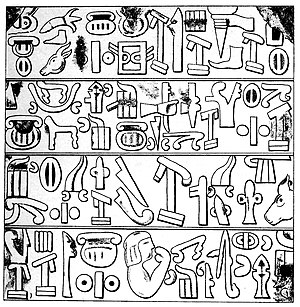
|
| Aztec | Nahuatl | Mesoamerica | before 16th century – c. 1530 AD | 
|
| Cretan | Minoan | Crete | c. 2100 – 1700 BC | 
(Phaistos Disc) |
| Cuneiform | Sumerian, Akkadian, etc. | Mesopotamia | c. 35th century BC – 2nd century AD | 
|
| Cypro-Minoan | Eteocypriot | Cyprus | c. 1550 – 1050 BC | 
|
| Egyptian | Egyptian | Egypt | 
| |
| Han | Chinese, etc. | East Asia | 2nd millennium BC – | 
|
| Linear A | Minoan | Crete | c. 1800 – 1450 BC | 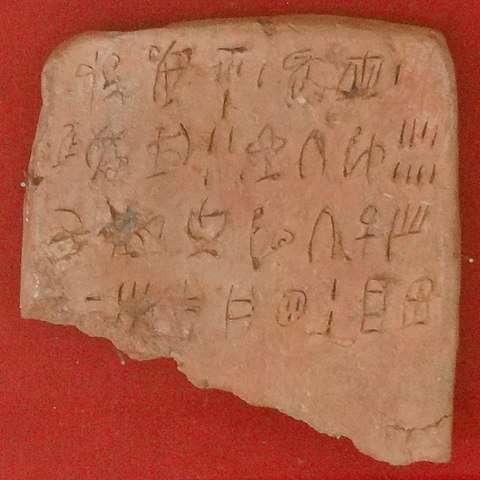
|
| Linear B | Mycenaean Greek | Mycenae | c. 1450 – 1200 BC | 
|
| Mayan | Chʼoltiʼ, Yucatec Maya, etc. | Mesoamerica | 3rd century BC – 16th century AD | 
|
| Mixtec | Mixtec languages | Mesoamerica | before 16th century – c. 1530 AD | 
|
| Yi | Yi | Southwestern China | 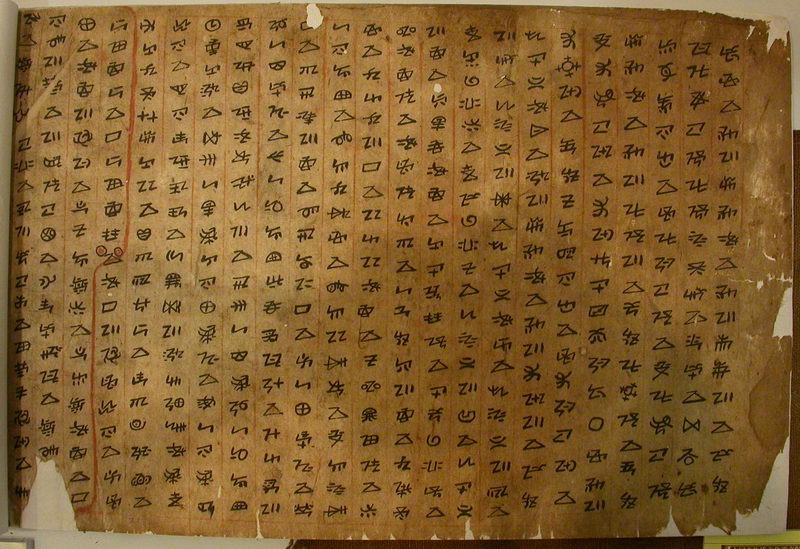
|
| writing system | language | region | timespan | example |
|---|---|---|---|---|
| Chữ Nôm | Vietnamese | Vietnam | 
| |
| Dongba | Naxi | Southeastern China | 
| |
| Jurchen | Jurchen | Northeastern China | 
| |
| Khitan large script | Khitan | Northeast Asia | 
| |
| Sawndip | Zhuang | Southern China | 
| |
| Sui | Sui | Southern China | 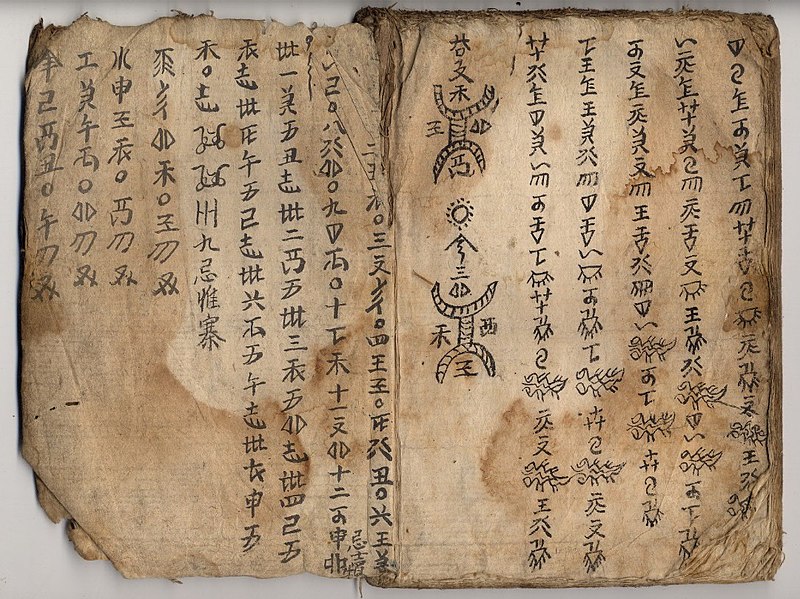
| |
| Tangut | Tangut | Northwestern China | 
|
Han
Han writing system is the one of the logograms that are still used today.
It has several different scripts. There used to be many different writings of a characters. After the unification of China, Qin Shi Huang abolished other writings, only keeping Qin State's writing as the official one, written with the small seal script.
During its development, many modifications took place. Wrong characters and unorthodox character variants are plenty. For example, “肉” (flesh) became confused with “月” (moon) and as a result, many characters with meanings related to flesh have the radical 月.
The simplification of Han was also happening through history. For example, “爲” became “為” and finally “为”, like Picasso's bull. In People's Republic of China, there were two attempts of simplification of Han, one of which was successful and the other failed. In Japan, there was one simplification and it was successful.
Currently, it is being used in China and Japan regularly; in Korea and Vietnam sporadically.
There have been some attempts to abolish Han. In China and Japan, they failed; in Korea and Vietnam, they were largely successful. In the Republic of Korea, some people call for having Han along with Hangul in textbooks; In Vietnam, some people call for having Han as a compulsory course in liberal arts.
Related resources:
- Chinese Etymology 字源 https://etymology.azurewebsites.net/ | https://hanziyuan.net/
| script | example |
|---|---|
| oracle bone script |
|
| bronzeware script | 
|
| seal script | 
|
| clerical script | 
|
| regular script | 
|
| script | example |
|---|---|
| cursive script | 
|
| semicursive script | 
|